Zhonghua New Martial Arts(Zhonghua New Martial Arts Staff Manual)
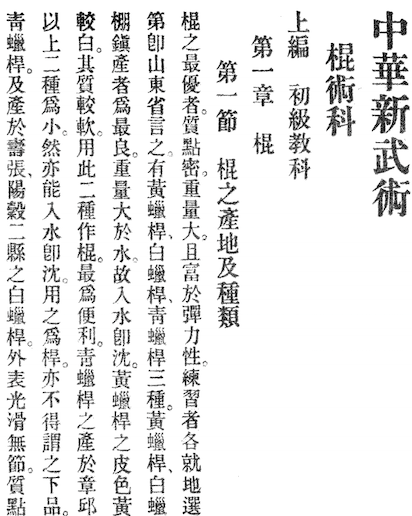
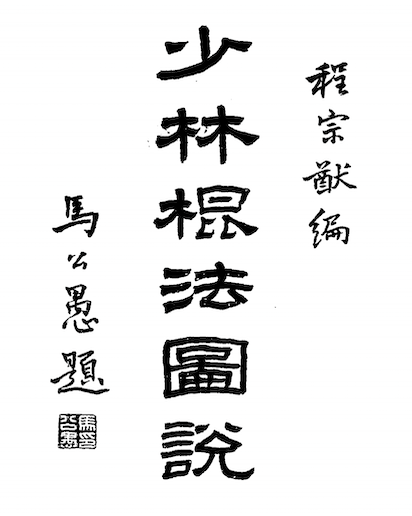
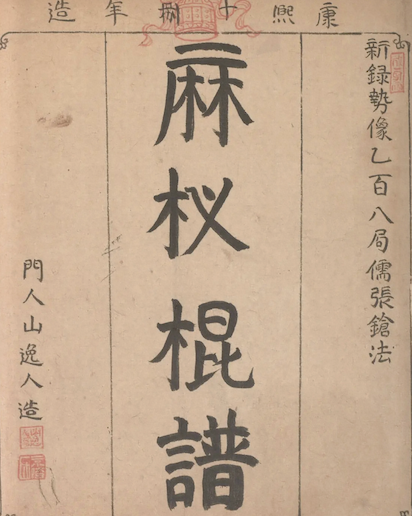
The Zhonghua New Martial Arts - Staff Training Manual (Zhōnghuá Xīn Wǔshù - Gùnshù Kē) is a core textbook from the early 20th-century Chinese martial arts reform movement known as "Zhonghua New Martial Arts." Compiled and promoted in the early Republican period (circa 1910s), it was not a simple collection of traditional folk techniques. Led by figures like Ma Liang, it was a product of the era's "Strengthen the Race, Save the Nation" ideology, representing a systematic, standardized, and militarized reorganization of traditional staff arts. Its purpose was to provide a unified, easy-to-learn, and practical group training syllabus for the military, police, and schools. It is a key document for studying the transition of Chinese martial arts from traditional transmission to modern sports and military training.
In the early 1900s, facing national crisis, intellectuals and military advocates promoted a "militarized citizen education," aiming to enhance national physique and discipline through mass military-style physical training. The "Zhonghua New Martial Arts" emerged from this. Its core philosophy was "transforming the scattered into the unified, progressing from simple to complex." It broke down traditional martial movements into single "postures" (similar to sections of modern calisthenics) for easy group drill by command. The Staff Manual was the concrete application of this philosophy to weapons training, embodying the fusion of a "martial spirit" with modern organizational methods.
Content Structure & Technical Features
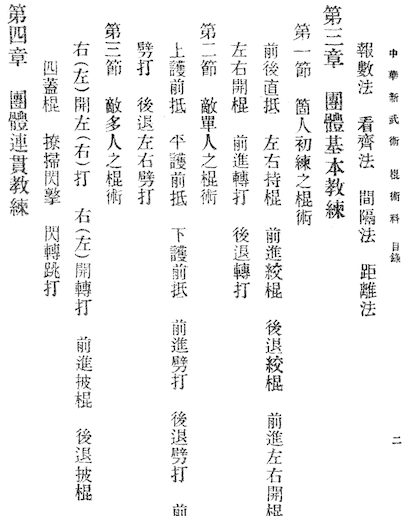
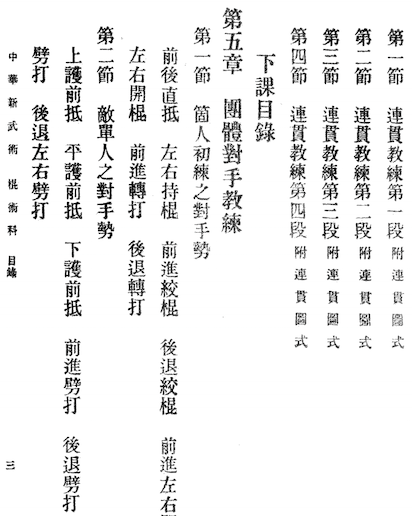
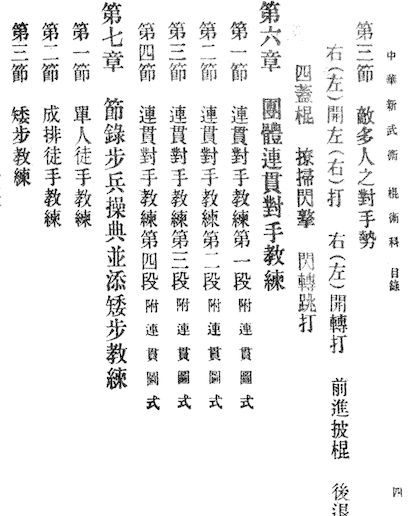
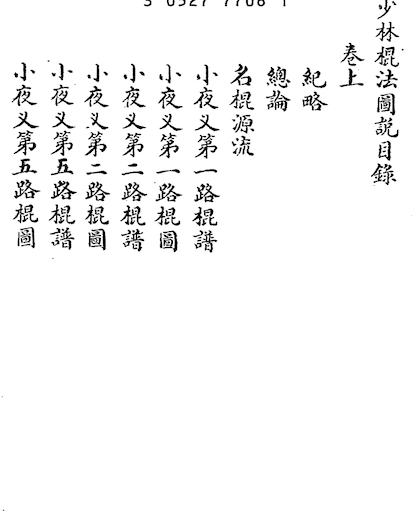
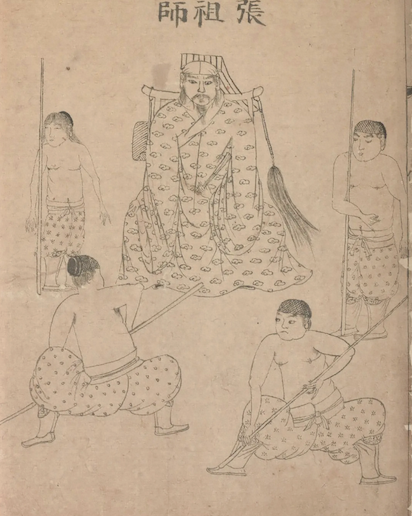
1. A Standardized Teaching System: The book dissected and refined traditional staff techniques into a series of connected "basic postures" (e.g., chop, press, thrust, parry). Each posture had a fixed number, illustration, drill command, and application note, fundamentally altering the traditional oral and demonstrative teaching model.
2. Military Training Orientation: The movements emphasized uniformity, powerful application, and practicality. Training was designed primarily for group drill by command, aiming to instill obedience, discipline, and group coordination. The technical focus leaned toward practical thrusting and blocking.
3. Simplified, Practical Techniques: It discarded the complex, flashy, and overly performative elements found in traditional forms, retaining and strengthening the most direct and effective staff techniques applicable to combat and bayonet training.
4. A Modern, Illustrated Textbook: Utilizing contemporary lithographic printing, it featured clear illustrations of movements with explanatory text, creating a standardized visual manual suitable for mass distribution.
The Staff Manual was adopted by some military academies, police schools, and educational institutions during the Republican era, profoundly impacting the modernization of Chinese martial arts. It signified the first attempt to systematically organize, simplify, and popularize martial arts at a national level. Historically, it was a crucial step toward the sportification and academic systematization of martial arts. Technically, its分解教学法 (decomposition teaching method) and group training model influenced the later development of modern martial arts routines and military bayonet drills. Today, it is not only valuable for martial arts history research, but its concise and practical technical system still holds relevance for modern defensive staff training.