The Language of the Pulse(Mai Yu)
A Paradigm Shift in Pulse Diagnosis
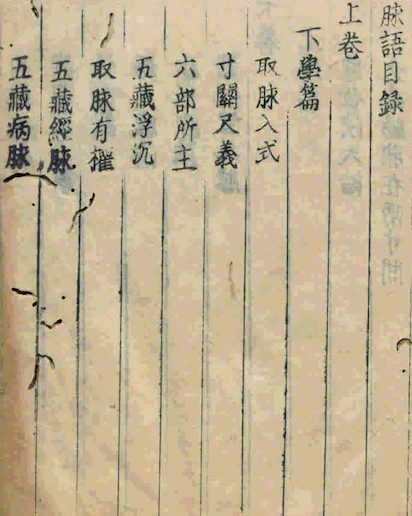
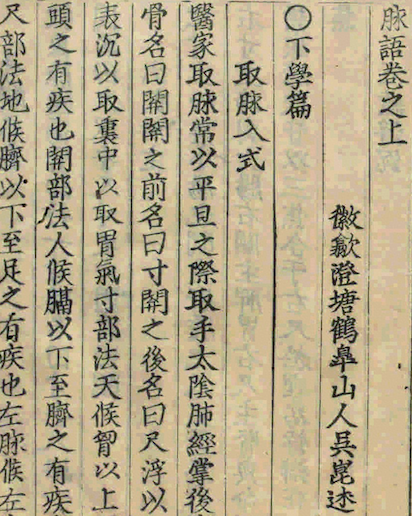
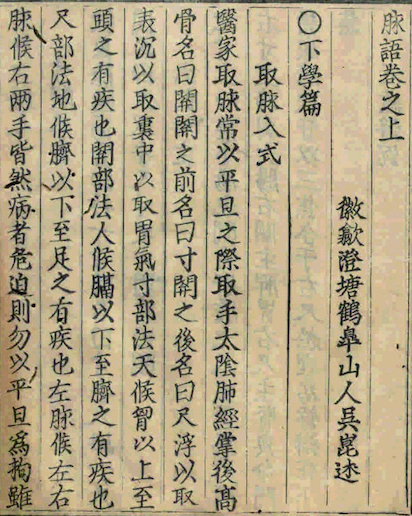
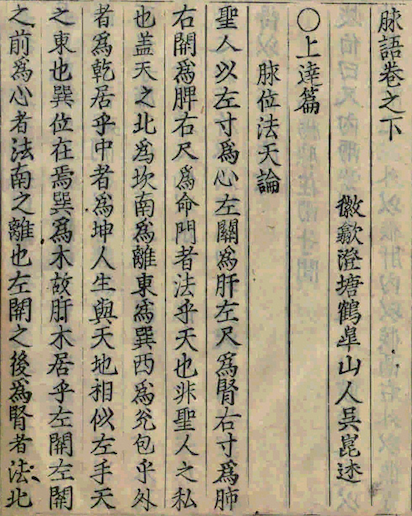
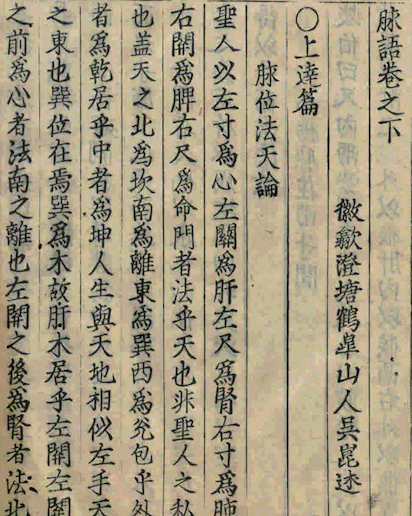
The Language of the Pulse (Mai Yu), written by the Ming Dynasty physician Wu Kun (1551-1620) and published in 1584, marks a milestone in Chinese medicine as the first dedicated work to systematically establish a semantic framework for pulse reading. Moving beyond the traditional model of "using the pulse to confirm a disease," it pioneered a new paradigm of "reading the signs through the pulse to comprehend the spirit," elevating pulse diagnosis from a diagnostic tool into a holistic system for interpreting the state of human life.
A Three-Dimensional Pulse Interpretation Model
1. The Semantic System of Pulse Imagery
Establishes a three-level interpretive framework of "Form – Dynamic – Spirit":
- Form Level (Physical Dimension): 28 morphological parameters like pulse position, length, and width.
- Dynamic Level (Kinetic Dimension): 16 dynamic characteristics such as speed of arrival/departure and quality of undulation.
- Spirit Level (Informational Dimension): Essential life-force information like the presence of Stomach Qi and the harmony of Yin and Yang.
2. The Revolution of Spatiotemporal Pulse Diagnosis
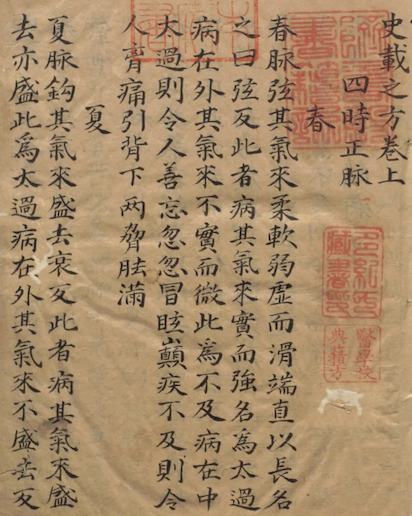
Introduces the "Chart of Seasonal Pulse Transformations," correlating pulse qualities with natural cycles:
- Spring - Wiry (Xian): Corresponds to the Liver's Wood element and its spreading nature.
- Summer - Flooding (Hong): Corresponds to the Heart's Fire element and its expansive nature.
- Autumn - Floating (Mao): Corresponds to the Lung's Metal element and its descending nature.
- Winter - Deep (Shi): Corresponds to the Kidney's Water element and its storing nature.
3. The Diagnostic Science of Pulse-Symptom Relationships
Creates a three-stage diagnostic method analyzing how the pulse and symptoms align:
- Corresponding: Pulse and symptoms match (conventional patterns).
- Contrary: Pulse and symptoms contradict (critical conditions like true cold with false heat).
- Concealed: The pulse hints at hidden disharmony not yet manifested in clear symptoms (e.g., emotional disorders, early pathological changes).
The enduring significance of The Language of the Pulse lies in its teaching that a practitioner's trained fingertips can learn to "listen"—not merely to the heartbeat, but to the concert of the organs, the resonance of Qi and Blood, and the echo of natural rhythms. In an age of CT scans and genomic sequencing, this work from four centuries ago reminds us that the most sophisticated instrument for assessing life may still be the cultivated human touch, and that profound health insights remain hidden within the subtle tremor of the pulse.