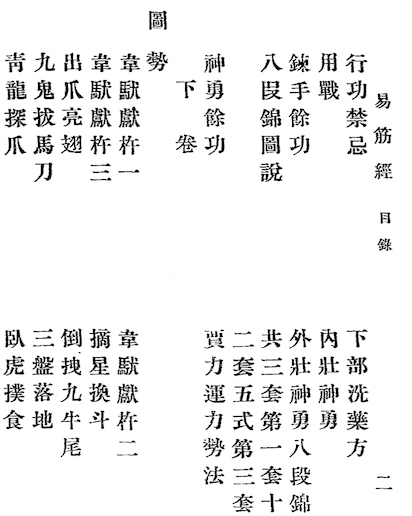
Illustrated Manual of the External Classic of Tendon Transformation(Yijin Jing external classic illustrations)
1. An Ancient Guide to Body Practice Beyond Martial Arts
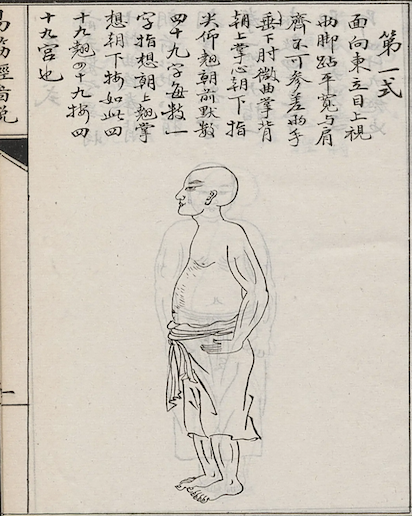
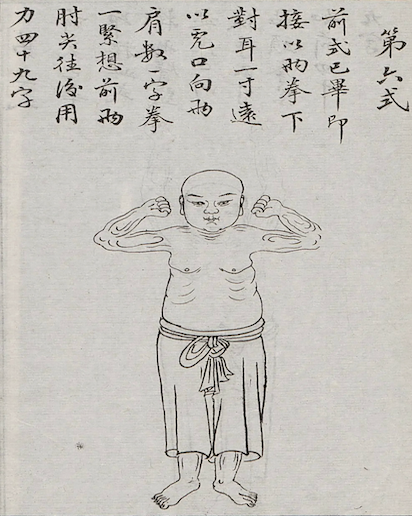
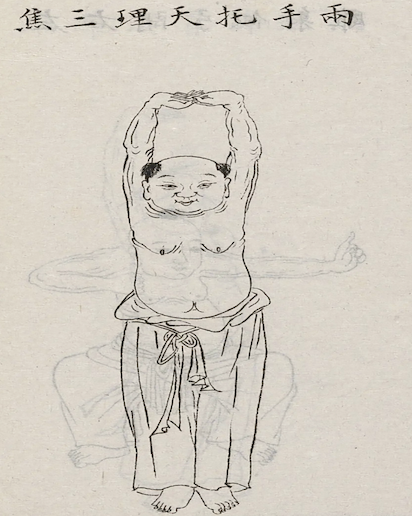
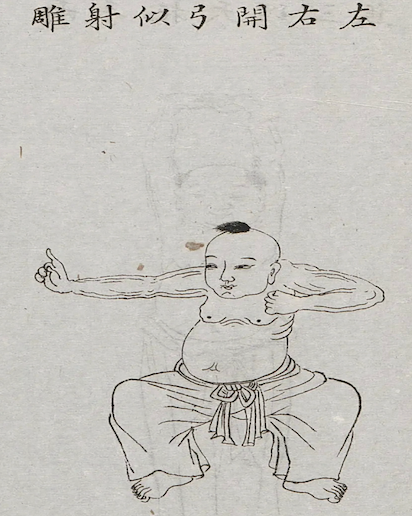
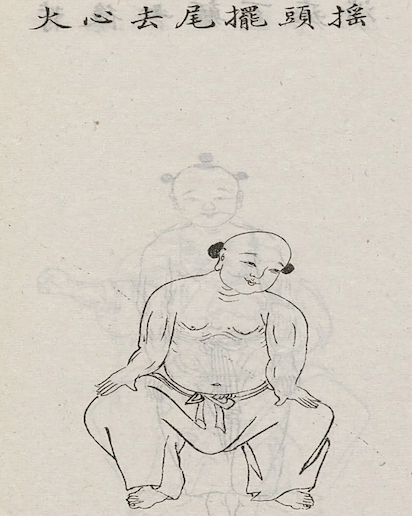
The Illustrated Manual of the External Classic of Tendon Transformation (Yijin Jing Waijing Tushuo) is a classic work of martial arts and health preservation circulating from the Ming-Qing period. Its core is not ordinary martial techniques but a training manual of specific postures designed to guide internal energy and systematically remodel the musculoskeletal structure. Typically paired with the main text of the Yijin Jing (the "Internal Classic"), it forms a complete system of "internal cultivation of Qi and external training of form." Centered around twelve or twenty-four key postures (Shi), its precise ergonomic diagrams reveal the unique ancient Chinese concept of viewing the body as a life structure that can be optimized and transformed. It is an interdisciplinary integration of body techniques bridging martial arts, medicine, and self-cultivation.
2. A Three-Tiered Training Science
2.1 Foundational Tier: Remodeling Tendon Mechanics (Postures 1-8)
Principle: Alters fascial viscoelasticity through maintaining static or extremely slow-motion tension ("stretching tendons and pulling bones").
Diagram Features: Highlight key load-bearing tendons (e.g., Achilles, iliotibial band), breathing rhythm points, and areas of mental focus.
Example: "Weituo Presenting the Pestle" posture – rebuilds the shoulder girdle kinetic chain through specific arm-support angles.
2.2 Core Tier: Reconstructing Joint Space (Postures 9-16)
This tier targets the three-dimensional adjustment of specific joint complexes (e.g., hip socket-femoral head), emphasizing non-inertial force generation and micro-tremors at extreme ranges of motion ("transforming the marrow").
2.3 Integration Tier: Unifying Kinetic Chains (Postures 17-24)
Constructs (linked movement) through the "foot-knee-hip-spine-shoulder-elbow-hand" chain.
Trains power output in unbalanced states.
Aims for a body structure where "every part is like a spring."
3. Four Hidden Biomechanical Mechanisms
3.1 Fluidizing the Fascial Matrix
Long-duration static stress prompts fibroblast realignment. The diagrams imply "hydraulic wave transmission paths" (modern "fascial lines"). The recorded "sweat like glue" phenomenon suggests metabolic glycosaminoglycan excretion.
3.2 Adaptive Changes to Bone Stress Architecture
Postures guide bone deposition along stress lines (Wolff's Law). For example, the "Three Plates Descend to Earth" posture enhances calcaneal and lumbar pedicle density.
3.3 Resetting the Autonomic Nervous System
Specific postures with breathwork can switch sympathetic/parasympathetic dominance. The "Nine Ghosts Pulling the Horse Saber" posture stimulates the auricular branch of the vagus nerve, inducing deep relaxation.
3.4 Reconstructing Body Image
Each posture includes "internal landscape imagery" (e.g., visualizing light at the Danzhong point). This aims to alter the body's representation in the motor cortex, addressing compensatory movement patterns from poor body awareness.
The Eternal Renovation of the Body-Temple
The most profound insight of the Illustrated Manual is that it does not treat the body as an unchangeable destiny but as a living structure that can be continually upgraded through intelligent work. In an age focused on isolating muscles with gym equipment, this ancient manual teaches that true physical transformation happens at the interfaces between tissue layers, in the dialogue between consciousness and matter, and in the courage to open the entire body structure to gravity and space. It does not ask us to conquer the body, but invites us to become its most patient architect.