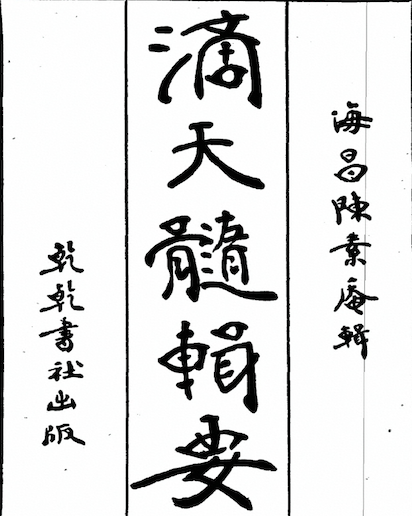
Di Tian Sui Ji Yao (The Essence of Di Tian Sui)
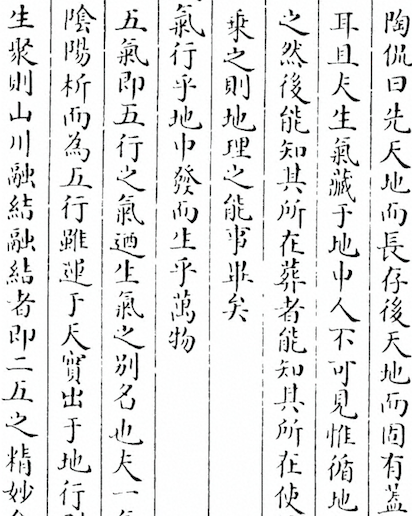
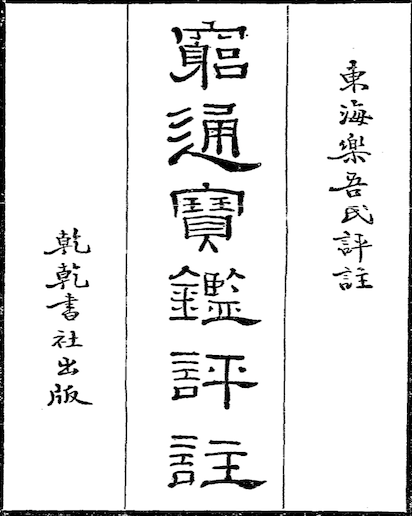
Di Tian Sui Ji Yao (The Essence of Di Tian Sui) is a classic revered as the "philosophical pinnacle of destiny calculation studies." Its core theories are traditionally attributed to the authentic text Di Tian Sui by Liu Bowen of the Ming Dynasty. It was later brilliantly annotated and condensed by the great Qing Dynasty master Ren Tieqiao, who integrated his own practical experience, transforming it into a complete, deeply insightful work passed down through generations. This book moves beyond mere case-based prediction or listing astrological deities. Instead, it goes straight to the heart of destiny study: the dynamic flow and dialectical relationships of energy within the interactions of Yin-Yang and the Five Elements. It explains the mechanisms of fate from a philosophical height, representing the key classic for elevating Bazi (Eight Characters) from a mere "technique" to a "philosophical path."
Core Philosophical Concepts & Theoretical Characteristics
1. A Complete System of "Principle, Energy, Image, and Number": It constructs a logically rigorous philosophical system of destiny based on "Principle" (the theory of Yin-Yang and Five Elements) as the foundation, "Energy" (the force of the Stems and Branches' elements) as the pivot, "Image" (the manifestation of the Ten Gods) as the expression, and "Number" (the success/failure of patterns and timing of luck cycles) as the verification.
2. A Dynamic Perspective of "Energy Flow": It does not rigidly focus on the strength of individual characters but emphasizes analyzing the prosperity/decline, strength/weakness, smoothness/stagnation, and purity/turbidity of the elemental energy throughout the entire birth chart. It proposes that "Heaven's Way has cold and warmth, Earth's Way has dryness and dampness, Humanity's Way has smoothness and obstruction," stressing that a destiny chart must harmonize with the natural tendencies of Heaven and Earth.
3. The Core Law of "Dialectical Balance": Integrating Confucian "Doctrine of the Mean" and Daoist "Yin-Yang Balance" thought into destiny study, it presents profound dialectical viewpoints such as "the strong should be restrained or drained, the weak should be supported or helped" and "having an 'ailment' makes one noble, having no 'flaw' is not remarkable." It posits that the interaction between the chart's "ailment" (imbalance) and the applied "medicine" (the Useful God) is precisely the key to life's fluctuations and achievements.
4. The Subtle Application of "Pattern and Useful God": It offers extremely profound discussions on the selection and application of the "Useful God" (the key element balancing the chart), distinguishing between various methods such as "support and restraint," "climate adjustment," "ailment and medicine," "mediation," and "specialized prosperity," going far beyond ordinary pattern analysis.
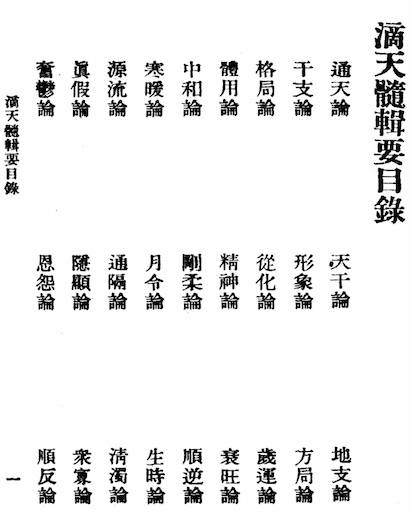
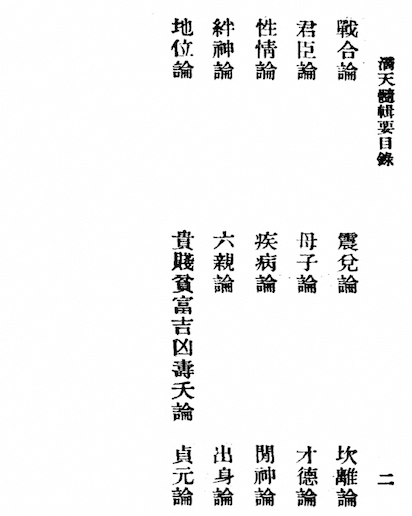
The modern version of Di Tian Sui Ji Yao is typically divided into two volumes or chapters like "On Connecting with the Divine" and "On the Six Relations." Ren Tieqiao's commentary is its soul:
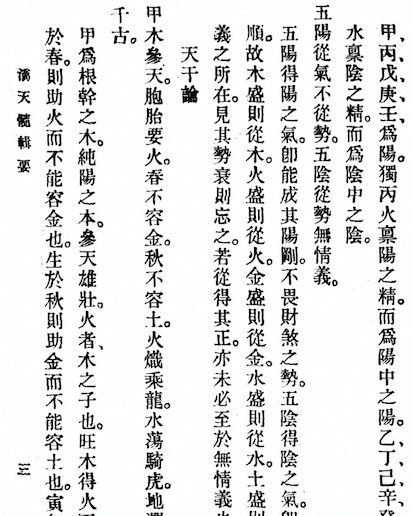
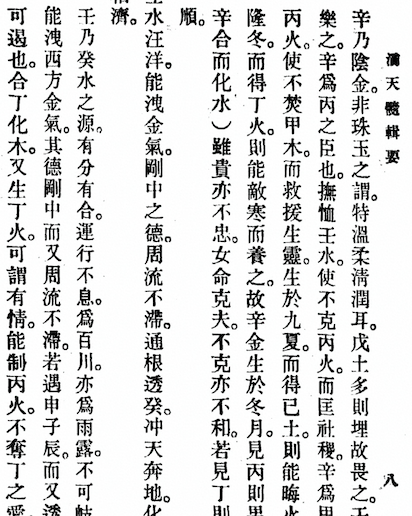
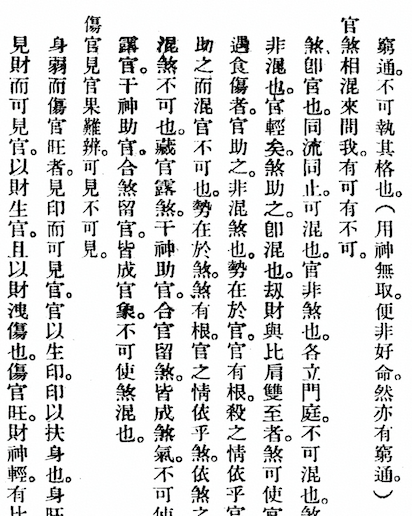
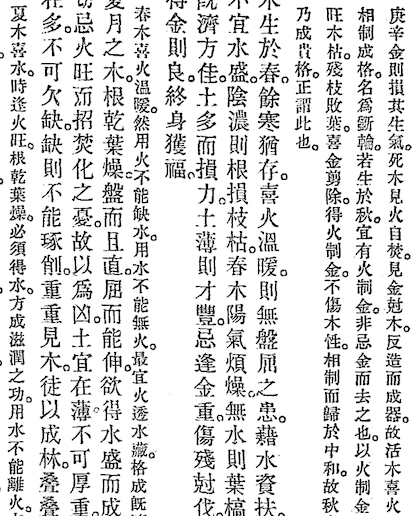
1. The Original Text's Essence: The original text often uses parallel prose or poetic formulas—concise, profound, and cryptic—such as "pure Qi ascends, turbid Qi descends" or "a 'Direction' is a 'Direction,' a 'Pattern' is a 'Pattern'; to grasp the 'Direction,' do not confuse it with the 'Pattern.'"
2. Ren's Commentary: Ren Tieqiao uses numerous real-life case studies to expound on the original text line by line, connecting lofty theory with concrete chart analysis. He transforms the cryptic into the practical, making abstract philosophy actionable. His commentary is revered as the essential and authoritative guide for studying Di Tian Sui.
Modern Study Value
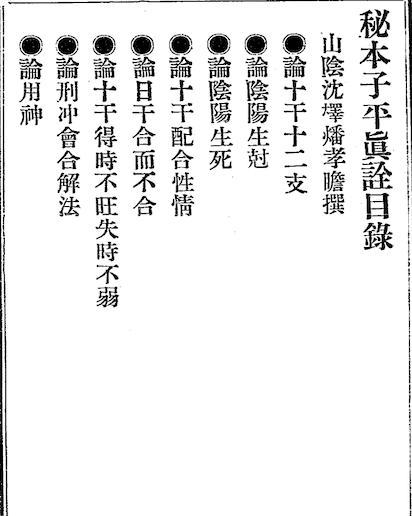
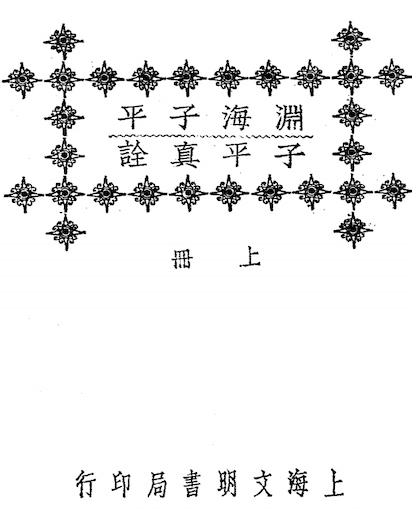
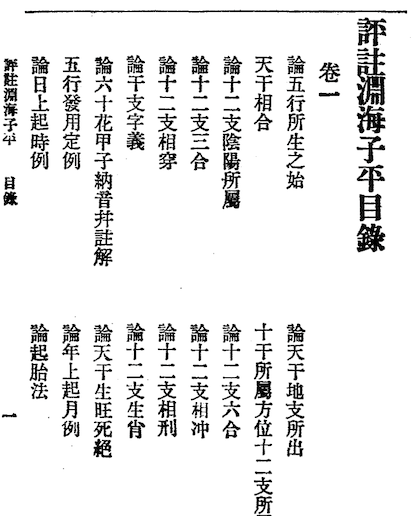
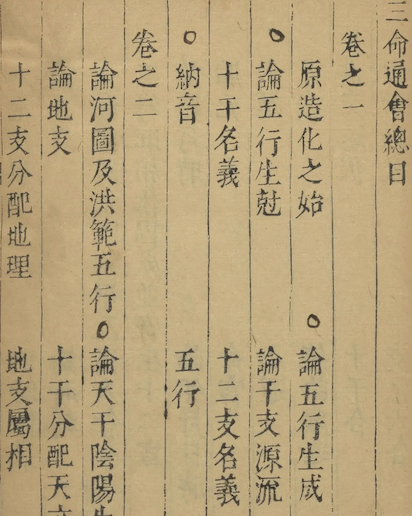
1. The "Bible" of Destiny Calculation: In the field of destiny studies, Di Tian Sui, along with Yuanhai Ziping, Ziping Zhenquan, and San Ming Tong Hui, is collectively known as the "Four Books of Destiny," and it is universally acknowledged as the work with the highest theoretical level and deepest philosophical content among them.
2. An Elevation of Thinking Mode: Studying this book is not merely learning a predictive technique; it is rigorous training in dialectical thinking and systematic analysis. It teaches the student to view destiny charts and life from a holistic, dynamic, and contradiction-transforming perspective.
3. Modern Relevance: The systems thinking, concepts of balance, and ideas of contradiction transformation contained within the book transcend destiny calculation itself. They offer profound insights for understanding complex systems, managing life's balance, and making strategic decisions. It reminds us that whether regarding fate or affairs, the internal "energy" and "flow" are often more critical than superficial strength or weakness.
In summary, Di Tian Sui Ji Yao is the jewel in the crown of destiny calculation. It is not content with telling people "what" but strives to reveal "why." For students aspiring to explore the source of destiny theory and enhance their philosophical reasoning, it is an unavoidable peak of wisdom.