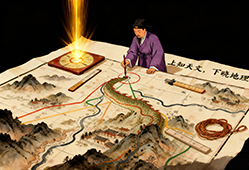
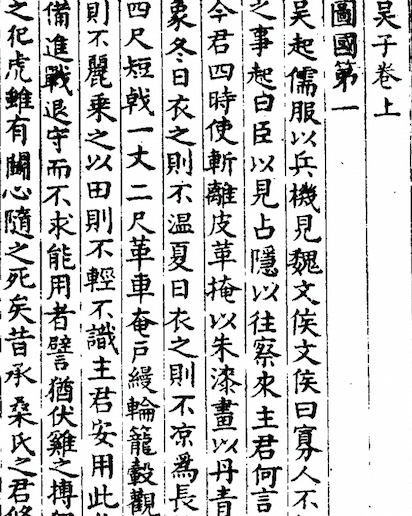
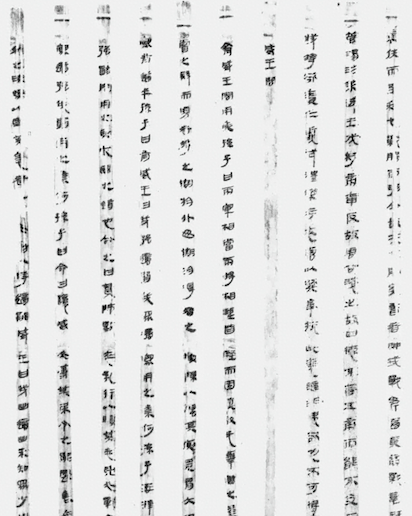
Wuzi's Art of War (Military Methods of Wuzi)
Wuzi's Art of War is a significant military treatise authored by the eminent strategist and statesman Wu Qi (Wuzi) during the early Warring States period. Alongside Sun Tzu's The Art of War, it forms the renowned pair known as "the military methods of Sun and Wu," and is included among the Seven Military Classics. The text centrally reflects Wu Qi's foundational philosophy of "cultivating civil virtue within and strengthening military preparedness without." It systematically explains military principles for army administration, commander selection, enemy assessment, and combat, while also integrating the practical wisdom from his political reforms and governance. It exemplifies the early fusion of military, Confucian, and Legalist thought characteristic of its era.
The Unity of "Civil Virtue" and "Military Preparedness"
The cornerstone of Wuzi's philosophy is the emphasis on "cultivating civil virtue within and strengthening military preparedness without." He argued that a state's true strength is rooted in internal political order and popular support ("civil virtue"), while a powerful military ("military preparedness") is essential for external threats. Neglecting either leads to weakness, elevating his thought from mere tactics to the level of national strategy.
A Systematic Military Framework
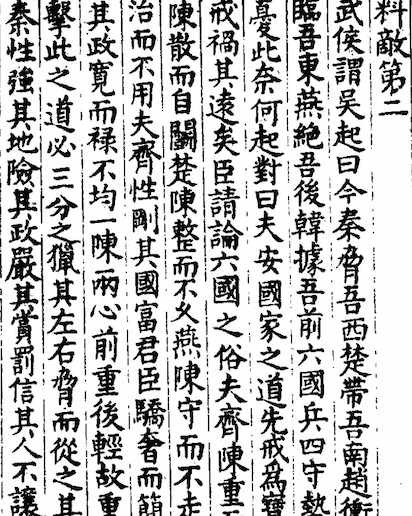
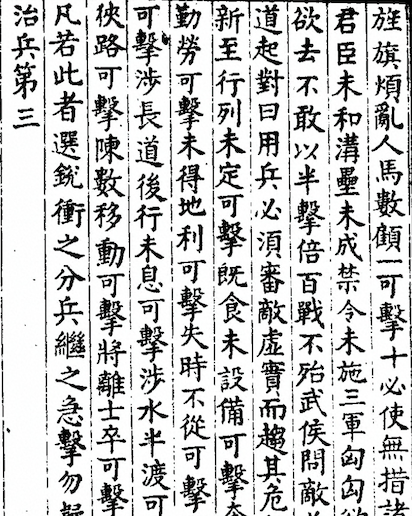
The text is logically structured into sections such as "Planning for the State," "Assessing the Enemy," "Governing the Troops," "On Generals," "Adapting to Change," and "Motivating Officers":
1. Army Administration: Advocating that "victory is achieved through good order," he stressed quality over quantity in troops, emphasizing rigorous training, strict discipline, and a unified system of rewards and punishments.
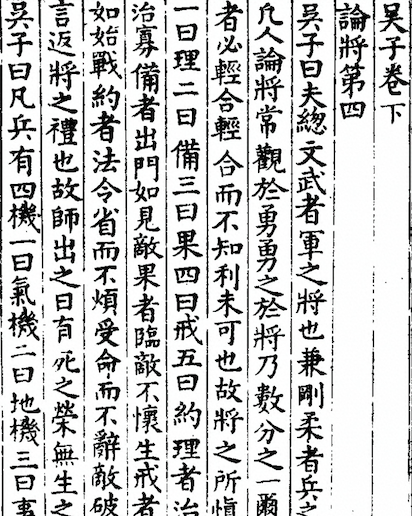
2. Commander Selection: He outlined that a general must possess the "Five Cautions" (rationality, preparedness, decisiveness, vigilance, restraint) and the "Four Virtues" (authority, virtue, benevolence, courage), valuing comprehensive character and moral leadership.
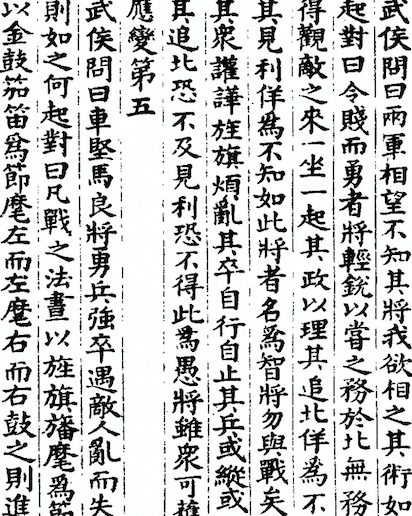
3. Enemy Assessment & Adaptability: He systematically analyzed the characteristics, populace, and military capabilities of the six major states (Qi, Qin, Chu, Yan, Han, Zhao). His principle was to "examine the enemy's substance and emptiness to attack its vulnerabilities," detailing methods of "adaptation" for complex terrain and situations of numerical inferiority.
4. Morale and Motivation: Emphasizing the "way to motivate officers and men," he advocated sharing hardships with the ranks. By ensuring merited rewards and caring for the troops, an army's morale would be unified, making them "eager to hear commands and willing to fight."
Historical Characteristics & Value
1. Strong Practicality: As a general and chancellor who served the states of Lu, Wei, and Chu, Wu Qi's theories stem from rich practical experience in both war and governance, making his advice concrete and actionable.
2. A Model of Military-State Integration: The text contains substantial statecraft (e.g., "instruct the common people and draw close to the masses"), reflecting an early tendency to blend military and Confucian thought, profoundly influencing the later ideal of the "scholar-general."
3. Elementary Military Psychology: His analysis of enemy psychology and troop morale is penetrating, with principles like "attack their doubts, assault their laxity."
Wuzi's Art of War is more than a military manual; it is a classical guide to organizational management, leadership, and statecraft. Its emphasis on vigilance in times of peace, its systemic thinking that balances civil and military affairs, and its pragmatic focus on understanding human nature remain deeply insightful for modern national security, corporate strategy, and leadership development.