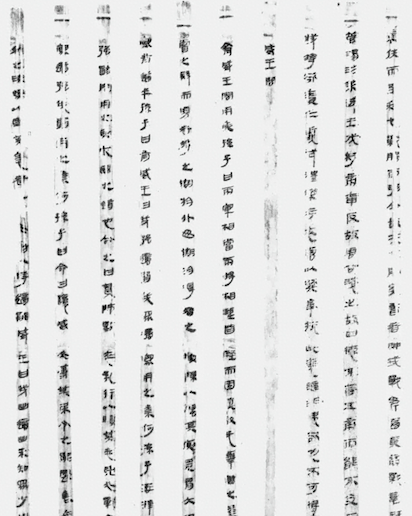
Liu Tao (The Six Strategies)
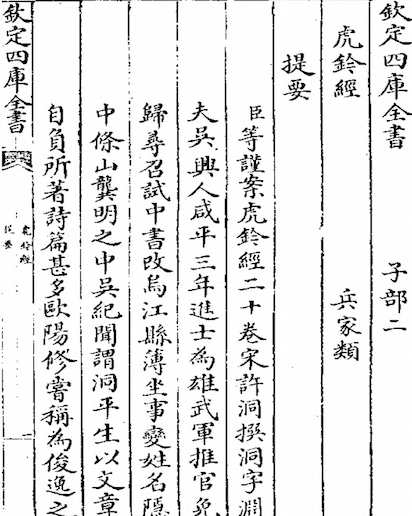
Liu Tao (The Six Strategies) is a renowned ancient Chinese military treatise. Traditionally attributed to Taigong Wang (Jiang Ziya) of the early Zhou Dynasty, it was actually compiled by military scholars between the Warring States period and the Qin-Han era. Structured as dialogues between Taigong and Kings Wen and Wu of Zhou, it systematically discusses a wide range of topics including state governance, military administration, commander selection, strategy, tactics, and equipment. It represents a synthesis of pre-Qin military thought, is paired with San Lue (The Three Strategies), and is included among the Seven Military Classics. Its influence on later military and political philosophy is profound.
Content Structure & Framework
The text is divided into six scrolls, each representing one "Tao" (strategy), forming a complete theoretical system of military-statecraft:
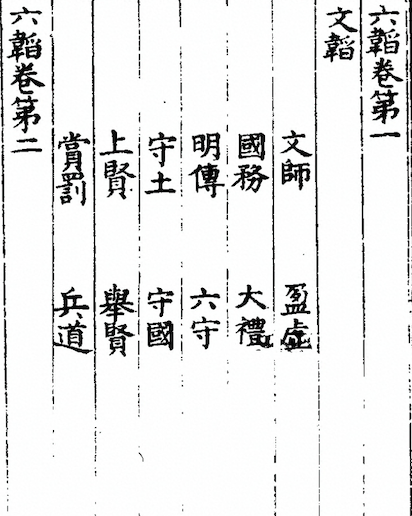
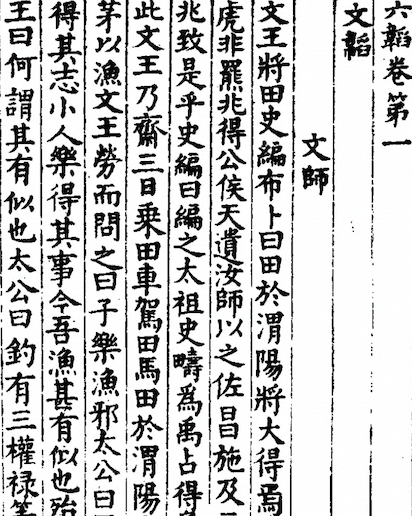
1. The Civil Strategy (Wen Tao): Discusses strategies for governing the state and pacifying the people, emphasizing winning popular support, developing the economy, and selecting talent to establish the political and economic foundation for warfare.
2. The Military Strategy (Wu Tao): Addresses the strategic principles of using force, advocating for cautious engagement, meticulous planning, and seizing opportunities. It focuses on combining "civil offensives" (political/diplomatic campaigns) with military action.
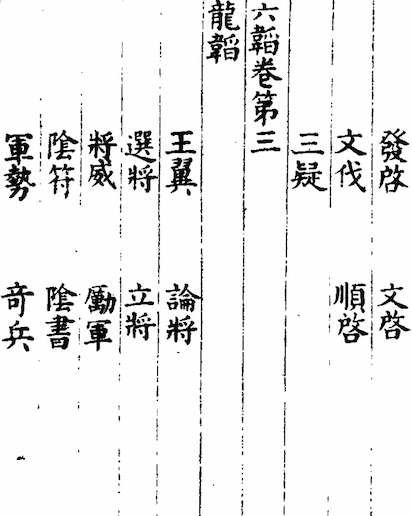
3. The Dragon Strategy (Long Tao): Covers military organization and command systems, detailing commander selection, army structure, signaling, and secret communications.
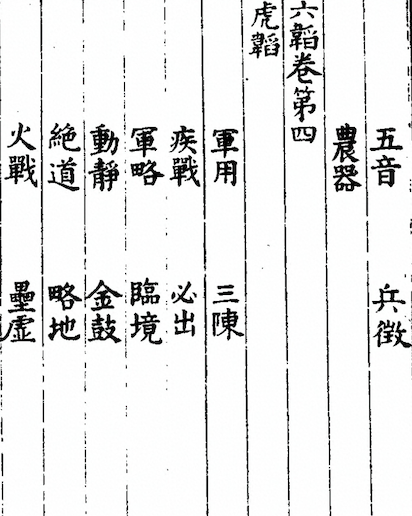
4. The Tiger Strategy (Hu Tao): Explains tactics for open-field battles and sieges, as well as the deployment and use of various weapons and equipment.
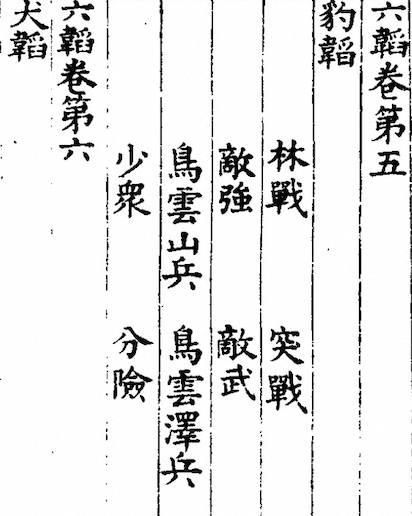
5. The Leopard Strategy (Bao Tao): Discusses combat in special terrains (e.g., forests, mountains, marshes) and tactics for responding to sudden crises.
6. The Dog Strategy (Quan Tao): Focuses on army training, combined arms operations (chariots, cavalry, infantry), and drill formations.
Core Principles
1. Holistic View Integrating Military and Governance: Emphasizes that the military is an extension of politics. It advocates that "the world does not belong to any single person, but to all under heaven," asserting that governing the state precedes administering the army, and that clear-sighted politics is the fundamental guarantee of military victory.
2. Importance of Strategic Intelligence & Covert Operations: Includes chapters like "Secret Tallies" and "Secret Letters," dedicated to coded communication, espionage, and intelligence gathering—a distinctive feature of the text.
3. Systematic Theory of Command: Proposes standards for commanders such as the "Five Talents" (courage, wisdom, benevolence, trustworthiness, loyalty) and the "Ten Faults," detailing their duties and the art of command.
4. Comprehensive Discussion of Tactics & Technology: The scope is exceptionally broad, covering everything from grand strategy to specific tactics, and from weaponry to logistics, encompassing nearly all aspects of warfare in the cold weapon era, giving it high value as a historical military source.
Although Liu Tao is a work of attributed authorship, it centrally reflects the profound understanding of warfare by military thinkers during the era of synthesized Hundred Schools thought from the Warring States to early Han. Its philosophy combines the people-oriented focus of Confucianism, the strategic cunning of Daoism, and the practical effectiveness of Legalism. Its systematic completeness is rare among early military texts. It not only provided practical guidance for later generals but also offers timeless insights for leadership, organizational development, and strategic planning through ideas such as "the soft can overcome the hard, the weak can defeat the strong" and "observe the people's hearts and attend to all affairs."