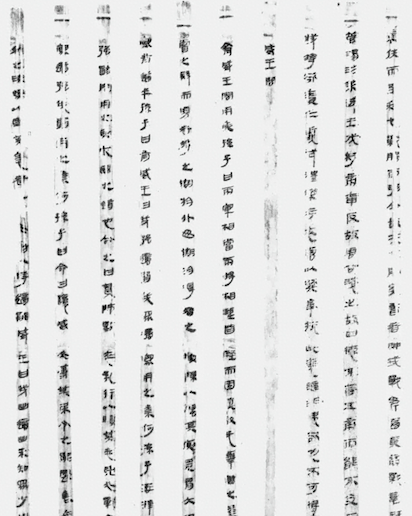
Jixiao Xinshu (New Treatise on Practical Military Training)
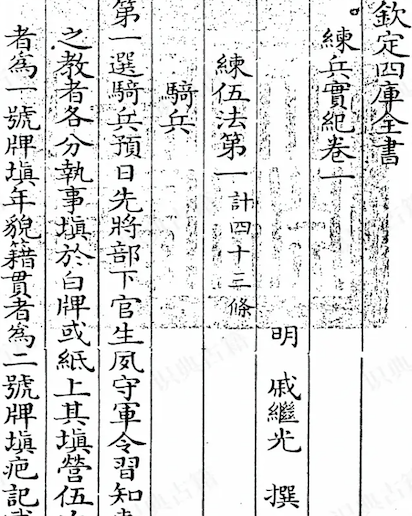
Jixiao Xinshu (New Treatise on Practical Military Training) is a classic military text compiled by Qi Jiguang, the renowned Ming Dynasty general and military reformer famous for resisting Japanese pirates (wokou). Completed around 1560, its title means a "new book recording effective methods." The work systematically summarizes Qi Jiguang's practical combat experience from the coastal campaigns in southeastern China. Its core principle is the "integration of training and combat, and the unity of knowledge and action," insisting that all drills and theories must be validated in battle and solve real problems. More than just the direct guidebook for training his famed "Qi Family Army," it represents a pivotal shift in mid-Ming military thought—from abstract theory towards a focus on practical effectiveness. Its influence on later military training in China and across East Asia was profound.
Core Philosophy
1. Utilitarian Principle of "Observing Effect in Battle, Validating Training through Combat": The entire text is guided by the idea of "training as you would fight." It asserts that all formations, martial skills, and commands must simulate real battlefield conditions and prove their worth in actual combat.
2. Flexibility of "Methods Change with Time, Tactics Adapt to Terrain": Qi Jiguang opposed rigid dogma. He stressed that tactics must be innovated and adjusted based on the enemy (the Japanese pirates' fighting style), his own troops' weaknesses, and the terrain (the river-network landscape of southern China), making the content highly targeted.
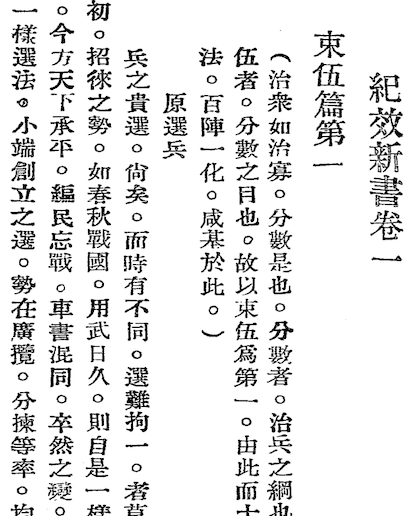
3. Systematized and Standardized Military Doctrine: It was pioneering in integrating soldier selection, weapon allocation, unit organization, formation drills, flag-and-drum signals, and reward/punishment regulations into a single, interlocking, standardized military system.
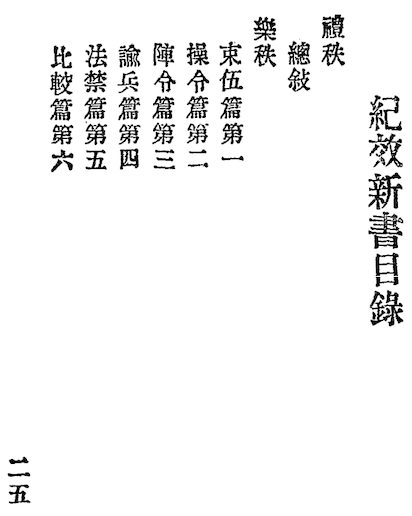
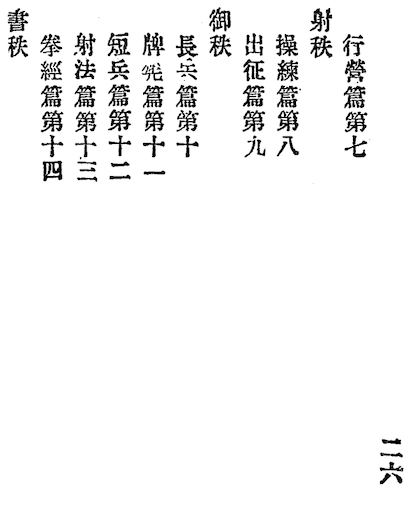
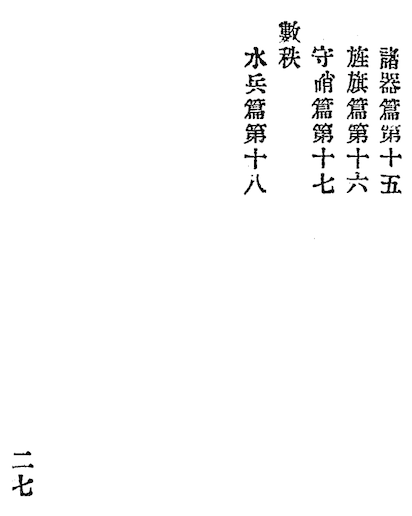
Comprising 18 volumes, the content is comprehensive and specific, establishing new paradigms in several areas:
1. Highly Targeted Tactical Innovations:
1-1. The "Mandarin Duck Formation" and "Little Three Talents Formation": Designed specifically to counter the pirates' skilled individual swordsmanship and dispersed tactics. These formations emphasized coordinated use of long and short weapons within small squads, integrating offense and defense with mutual support—a famous example of team-based tactics in military history.
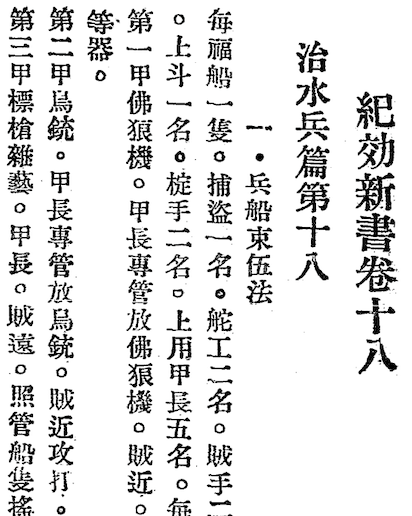
1-2. Naval and Land Warfare Methods: It details naval tactics against pirate ships, sailor training, and coastal defense strategies.
2. Exhaustive and Complete Training Program:
2-1. It provided a clear, step-by-step manual with illustrations and mnemonic rhymes for everything from the basic movements of individual weapons (wolf brushes, rattan shields, long spears) to the precise commands for evolving formations. It can be considered an ancient "standardized military training manual."
2-2. A dedicated "Chapter on Courage and Spirit" emphasized training psychological resilience and fighting will, arguing that "training courage" was more important than "training skill."
3. Comprehensive Army Management System:
3-1. It covered details like camp discipline, hygiene, weapon maintenance, supply distribution, and casualty care, demonstrating a deep understanding of the army as a complex organizational system.
3-2. It set clear standards for the selection, assessment, and duties of officers, insisting that commanders must master martial skills, understand training, and lead from the front.
The historical significance of Jixiao Xinshu is profound:
1. Proof through Combat Success: The training system established by this book forged the highly effective "Qi Family Army," which essentially eradicated the pirate threat in the southeast, proving its methods in the crucible of war.
2. A Paradigm Shift in Military Science: It marked a major expansion in classical Chinese military studies—from a focus on grand strategic philosophy (like The Art of War) towards an emphasis on mid- and micro-level organizational management, training science, and standard operating procedures.
3. International Dissemination & Influence: The text was transmitted to Korea and Japan, where it was widely studied, significantly influencing early modern military culture in East Asia.
4. Managerial Wisdom Beyond the Military: The systems thinking, standardized process management, team-building principles, and pragmatic innovative spirit contained within the book make it a valuable historical case study for organizational management and leadership. Its core insights remain relevant for modern business management and team training.
In summary, Jixiao Xinshu is not merely a "book of victories" tied to illustrious military achievements. It is, more importantly, a "book of practice" imbued with deep managerial philosophy and methodology. It elevated warfare from an art to a teachable, replicable, and verifiable practical science. Its light transcends its era, continuing to illuminate the path of pragmatism and innovation.