Systematic Annotations of the Classic of Difficulties(Nan Jing Ji Zhu)
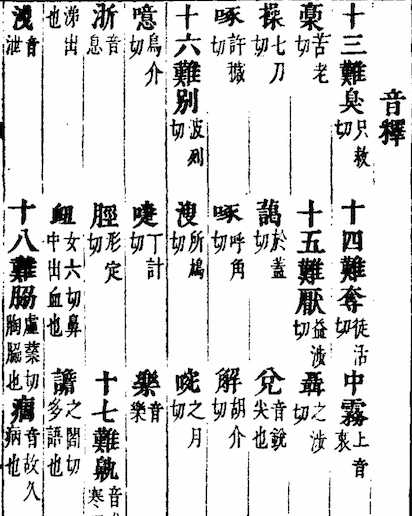
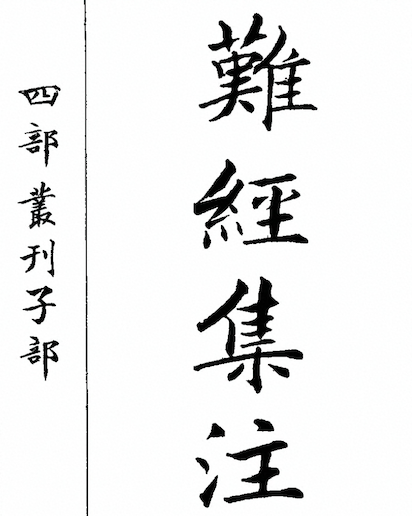
The Systematic Annotations of the Classic of Difficulties is a crucial text in the history of Chinese medicine, providing comprehensive exegesis on the seminal classic, The Classic of Difficulties (Nan Jing). Traditionally attributed to the legendary physician Bian Que (Qin Yueren) of the Warring States period, The Classic of Difficulties clarifies complex concepts from The Yellow Emperor's Inner Canon in a question-and-answer format. The Systematic Annotations is not the work of a single author but rather a critical compilation and editing of commentaries from multiple eminent physicians from the Three Kingdoms period through the Tang and Song Dynasties. It is an essential text for studying the ideas within The Classic of Difficulties and understanding the evolution and differing scholarly interpretations of ancient medical theory.
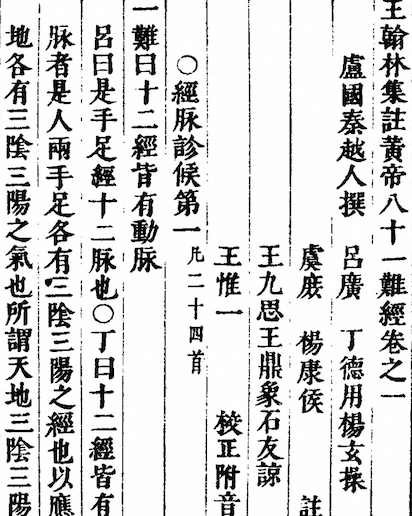
The core value of this text lies in its nature as a "collection of annotations" (Ji Zhu), synthesizing multiple interpretive schools. The commonly circulated edition was compiled in the Ming Dynasty by scholars like Wang Jiusi. It primarily brings together the commentaries of five notable physicians: Lü Guang (Wu Kingdom, Three Kingdoms period), Yang Xuancao (Tang Dynasty), Ding Deyong (Song Dynasty), Yu Shu (Song Dynasty), and Yang Kanghou (Song Dynasty). By presenting different explanations for the same "difficulty" or question side-by-side, it allows readers to grasp the classic's profound meanings more fully and observe the development and divergent interpretations of medical theory across different historical periods.
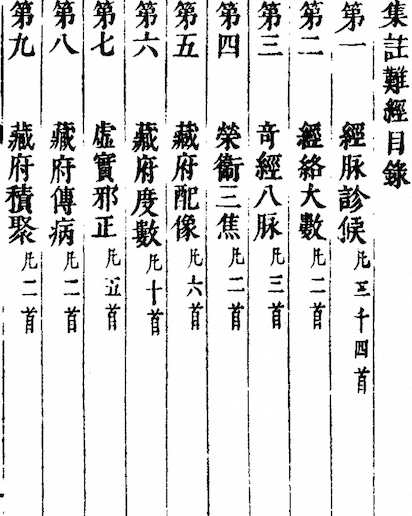
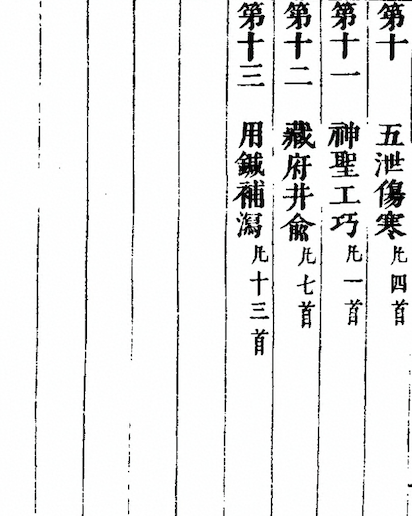
Organized around the 81 difficulties of the original classic, the annotations focus on and contribute to several key areas:
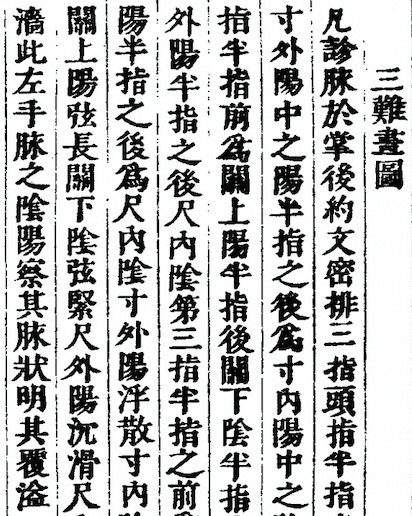
1. Systematization of Pulse Diagnosis Theory: It provides in-depth elaboration on The Classic of Difficulties' unique theories, such as "diagnosis solely by the cunkou pulse" and the "three regions and nine indicators," making the system of Chinese pulse diagnosis clearer and more operational.
2. Clarification of Meridians & Acupoints: The commentaries annotate and expand on concepts like the Eight Extraordinary Meridians and the Front-Mu and Back-Shu transport points of the organs, solidifying the theoretical basis of acupuncture.
3. Deepening of Organ Function Theory: The text's annotations debate and elaborate from various angles on key propositions from The Classic of Difficulties, such as "the left kidney is the kidney, the right kidney is the gate of life (mingmen)" and "the triple burner has a name but no form," greatly enriching Zang Xiang (organ manifestation) theory.
4. Expansion on Disease Principles & Treatment: Incorporating clinical practice, the commentaries supplement and provide examples for the disease mechanisms, treatment principles, and methods of needling and herbal application discussed in the classic.
This compilation is an indispensable bridge for studying The Classic of Difficulties. It preserves early and precious exegetical literature (e.g., Lü Guang's commentary is the earliest known complete annotation) while vividly demonstrating the dynamic process of scholarly transmission and debate in Chinese medicine. For students, it helps overcome the obscurity of the original classic. For researchers, it is a valuable repository for investigating the history of Chinese medical theory and tracing academic lineages. Through The Systematic Annotations, one gains access not only to a classic but also to the vibrant intellectual landscape of medical thought across centuries.