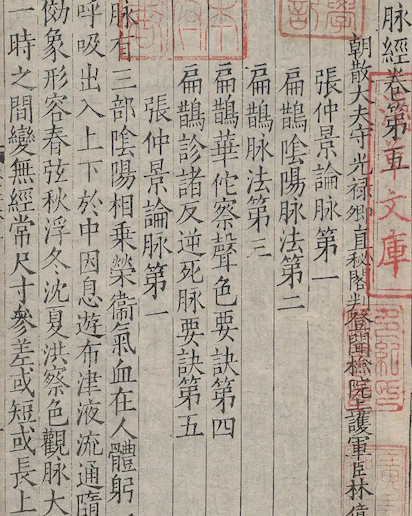
Mai Jing (The Pulse Classic)
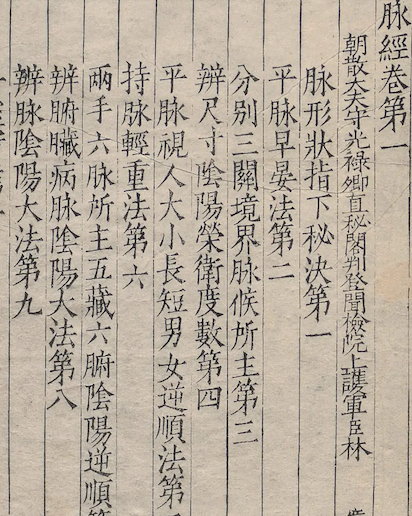
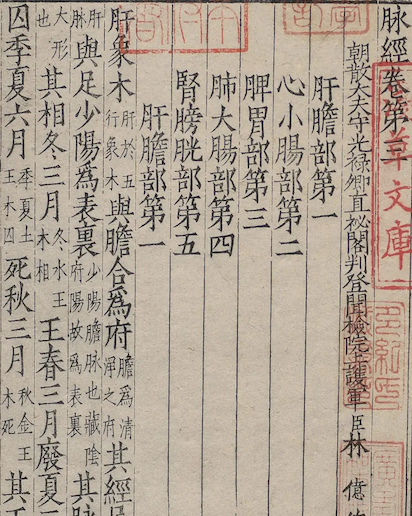
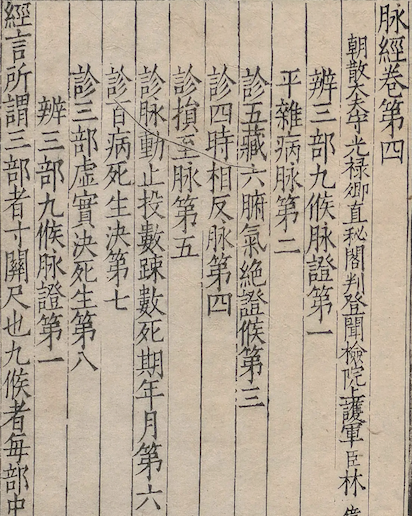
Mai Jing (The Pulse Classic), compiled by the Western Jin Dynasty physician Wang Shuhe in the 3rd century CE, is the earliest surviving comprehensive and systematic专著 (specialized treatise) on pulse study in China. For the first time, it comprehensively summarized and standardized the theory and methods of Chinese medical pulse diagnosis. It systematically organized and elaborated on pulse-related discussions scattered throughout texts like The Inner Canon, The Classic of Difficulties, and the works of Zhang Zhongjing, establishing pulse diagnosis as an independent discipline within Chinese medicine. It is honored as the "foundational text of pulse study."
Core Content & Scholarly System
1. Systematic Classification of 24 Pulse Patterns: It was the first text to categorize pulse signs into 24 fundamental types, such as Floating, Sunken, Slow, Rapid, Slippery, Choppy, Deficient, and Excess. It provided precise definitions for the finger-sensation ("finger feeling") of each pattern, laying a solid foundation for all future pulse classification.
2. Establishment of the "Cunkou Pulse Diagnosis Method": It clearly advocated for and systematically detailed the method of diagnosis focusing solely on the "Cunkou" (the radial artery at the wrist). It meticulously defined the correspondences between the three regions (Cun, Guan, Chi) and the internal organs. This method remains the standard site for pulse-taking in Chinese medicine today.
3. Integration of Pulse, Pattern, & Treatment: Closely linked to clinical practice, it discusses the physiological and pathological significance, disease prognosis, and treatment principles corresponding to various pulse patterns, embodying the clinical mindset that "the pulse is the key to the physician's art."
4. Differential Diagnosis & Pattern Differentiation: It emphasizes the comparative鉴别 (differentiation) of similar pulse patterns (e.g., Floating vs. Hollow, Sunken vs. Hidden), enhancing the precision and practical utility of pulse diagnosis.
Historical Contribution & Value
1. Standardization & Transmission: It ended the fragmented state of pulse theory prior to the Han dynasty, enabling its systematic transmission and reducing ambiguity in experiential descriptions.
2. Theoretical Guidance for Clinical Practice: It elevated pulse diagnosis from an experiential skill to a clinical diagnostic discipline with systematic theoretical guidance, significantly advancing the field of Chinese medical diagnostics.
3. Profound International Influence: It was transmitted early to regions such as Japan, Korea, and the Arab world, significantly influencing the development of pulse diagnosis in global traditional medicine systems.
Modern Study & Application
Mai Jing remains essential reading in Chinese medical diagnostics education and is a core classic for clinicians seeking to refine their pulse diagnosis skills and improve diagnostic accuracy. Modern research into Chinese pulse diagnosis still uses its theories as a starting point. Studying Mai Jing is not merely about mastering a diagnostic technique; it is a vital pathway to understanding the unique Chinese medical perspective on life—how subtle changes in the superficial pulse can reveal the state of Yin-Yang, Qi-Blood, and organ function within the body.