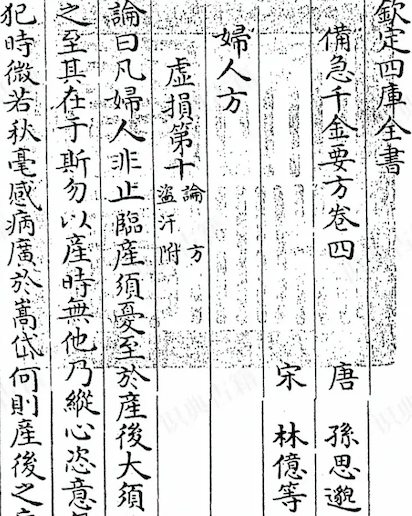
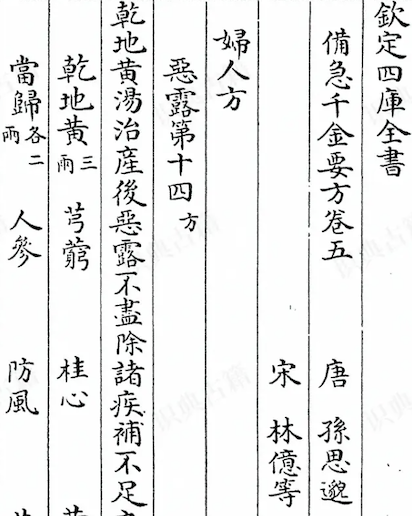
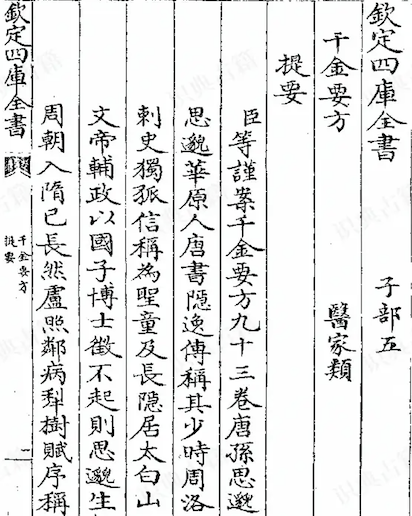
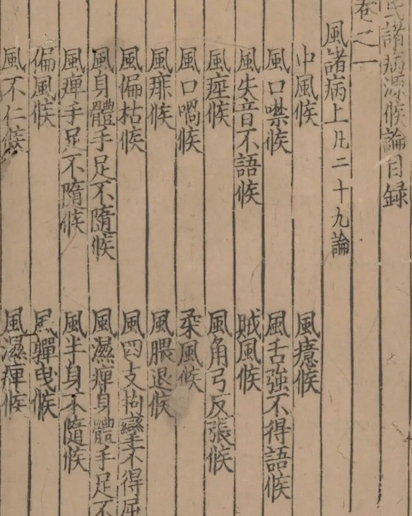
Beiji Qianjin Yaofang (Essential Formulas for Emergency Use Worth a Thousand Gold)
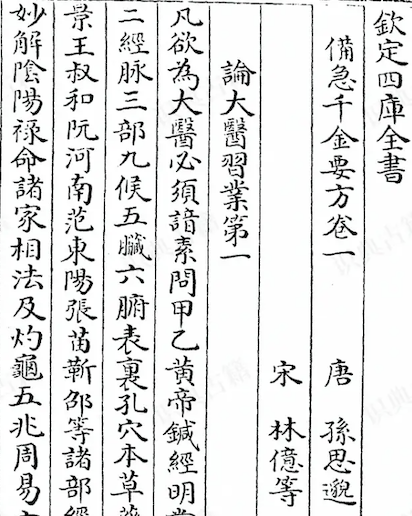
Beiji Qianjin Yaofang, commonly known as Qianjin Yaofang, was authored by the Tang Dynasty physician Sun Simiao and completed in 652 CE. This monumental work synthesizes medical knowledge from before the Tang period, systematically compiling the diagnosis and treatment experiences and formulas from all clinical branches. It is the first comprehensive clinical medical text in Chinese history to establish a complete system integrating theory, diagnostic methods, formulas, and materia medica. Its title reflects Sun Simiao's core belief that "human life is of utmost importance, more valuable than a thousand pieces of gold" and the practical spirit of preparing remedies for urgent needs. Its influence on the later development of Chinese medicine is profound.
Content Structure
Comprising 30 volumes, the text is vast in scope, organized into 232 categories and containing over 5,300 formulas. It innovatively broke from the traditional disease-based classification by pioneering a framework organized by organ systems (Zang-Fu) with diseases and patterns as subsections, making clinical practice more systematic.
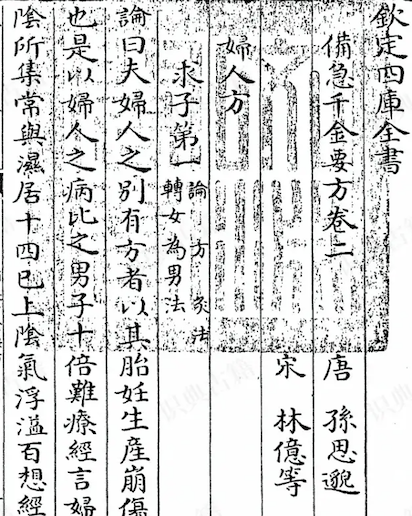
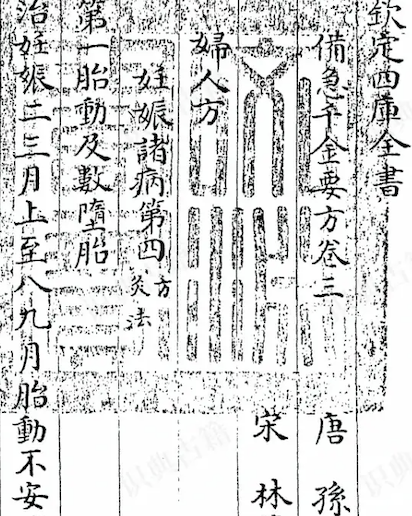
1. Comprehensive Clinical Coverage: It encompasses almost all medical fields: gynecology, pediatrics, internal medicine, surgery, ENT, dermatology, emergency medicine, dietary therapy, health preservation, and acupuncture. Its separate sections on gynecology and pediatrics were groundbreaking.
2. A Treasury of Formula Science: It collected a massive number of formulas, ranging from the classical prescriptions of Zhang Zhongjing (Han Dynasty) to contemporary folk remedies. Many famous formulas, such as Wen Dan Tang (Warm the Gallbladder Decoction), Du Huo Ji Sheng Tang (Angelica Pubescens and Loranthus Decoction), and Wei Jing Tang (Reed Stem Decoction), were first recorded here, with detailed composition, dosage, preparation methods, and indications.
3. Emphasis on Medical Ethics & Holistic Treatment: It begins with the seminal essay "On the Absolute Sincerity of Great Physicians," systematically outlining medical ethics. Therapeutically, it advocates for the integrated use of herbs, acupuncture, massage, Daoyin (guided exercise), and dietary therapy.
Core Academic Principles & Contributions
1. Foundational Medical Ethics: The essay "On the Absolute Sincerity of Great Physicians" established the model for professional ethics in Chinese medicine, emphasizing that a physician must possess a "heart of great compassion and sympathy"—a principle that remains influential.
2. Focus on Prevention & Health Preservation: It elaborates on the concept of "treating disease before it arises" and contains numerous practical methods for nurturing life, promoting longevity, and dietary living, reflecting a proactive approach to health management.
3. Advancement of Organ System Pattern Differentiation: Its organ-system-centered classification framework promoted the deeper clinical application and development of Zang Fu (organ) pattern differentiation theory.
4. Preservation of Lost Medical Texts: The book quotes extensively from pre-Tang medical texts that are now lost, giving it immense value for philological and historical research.
Qianjin Yaofang, together with its companion text Qianjin Yifang (Supplement to the Formulas Worth a Thousand Gold) compiled later in Sun Simiao's life, represents the pinnacle of Tang Dynasty medical achievement. This text not only guided clinical practice in China for over a millennium but also spread to Japan, Korea, and beyond, profoundly shaping East Asian medical systems. Modern TCM clinical practice, education, and research continue to draw wisdom from it. Its recorded formulas are widely studied and applied, and its advocated ethical principles and holistic medical model remain highly relevant for contemporary medical humanities and integrative medicine.